Retinitis Pigmentosa isn’t one story: Volunteers share their experiences
This February, Sight Loss Councils are marking Retinitis Pigmentosa Awareness Month by sharing the voices and experiences of volunteers living with Retinitis Pigmentosa (RP).
RP affects everyone differently, and the experiences of living with sight loss vary greatly. To mark this year’s RP Awareness Month, we asked volunteers from our Sight Loss Councils to share how RP has changed their lives, what misunderstandings they’ve faced, and what helps them day to day.
Each story is unique, and together their words show resilience, adaptation, and the power of community.
Josie Clarke
North Yorkshire Sight Loss Council member
“After my diagnosis, I felt scared – for myself and my family. I worried about how I would cope and what life would look like. Over time, I realised that obstacles can be overcome with support, patience, and care. My dear family and friends have been beyond invaluable.
“I’ve done things I never imagined – sailing, learning golf, and even driving a Ferrari with assistance.
“Volunteering with the Sight Loss Council has enabled me to meet other amazing and inspirational people with sight loss and shows that we can make a difference. My long cane, being organised at home, and staying visible in the world help me maintain my independence and show others that small adjustments can make a big difference.”
A lot of people misunderstand RP. They think that you cannot see anything and therefore are unable to do anything. How wrong can they be?!
“My mindset is that I need and want to be out and about and seen doing things. The more we do this, the more people will understand and see that we’re ‘okay’. Then they can make reasonable adjustments with understanding.”
Ann Griffin
North London Sight Loss Council member
“One of the biggest changes RP has brought into my life is learning to ask for help and accept it. I’ve always been very independent, so this was a huge shift for me. Now, I find kindness in strangers every day, which is hugely life affirming. Being helped in the supermarket or navigating between tube stations has become part of my new normal, and I feel far more connected to my community because of it.
“Something I’ve realised people often misunderstand about RP is partial sightedness. People often think you are either fully sighted or fully blind and don’t realise there’s a huge range of sight loss. I really felt this when I first started using a white cane. After being fully sighted for 50 years, I struggled with this change in identity. Once, on the underground, I was offered a seat. When I later took out my phone, it was clear people were shocked – as if I didn’t fit what they expected a blind person to look like, and they seemed to be questioning whether I was a fraud. Since then I have felt at times that I need to perform as a fully blind person to avoid people feeling confused or judging me for not being blind enough.
“Being matched with my first guide dog, Ralph, has transformed my life. With him, I feel empowered and more like myself – like riding a chariot through the streets, weaving through crowds. When he’s off duty, he’s a lovable, bouncy dog who brings joy to every day. A guide dog isn’t for everyone, but for me, Ralph truly enriches my life.”
Amin Afzal
Greater Manchester Sight Loss Council member
“When I was diagnosed with RP, my life turned upside down. I had to stop driving and learn to use public transport, which was daunting at first. In the beginning, I could only see the negatives, but over time I began to find positives I never expected.
“Through my diagnosis, I got involved in sports like cricket and goalball, which improved my physical health and introduced me to others living with sight loss. RP also led me to volunteering with Greater Manchester Sight Loss Council, something I’ve been part of for five years and which has given me purpose and connection.
“One of the biggest misunderstandings about RP is that it affects everyone the same way. In reality, it’s different for everyone. My sight changes throughout the day and across the seasons, and night blindness is a real challenge for me.
“Day to day, my cane and a torch give me confidence and independence, especially when I’m out on my own. They help me feel safer and more in control of my surroundings.”
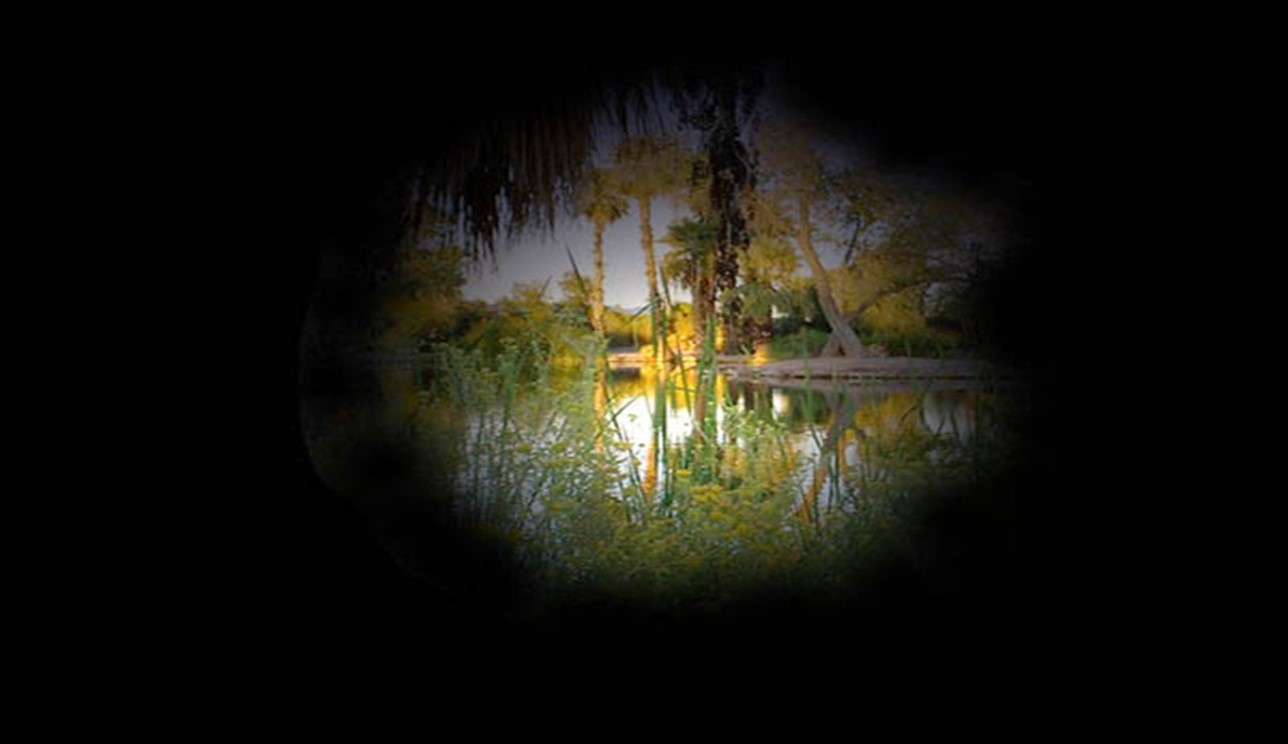
An example of what tunnel vision, or peripheral vision loss, looks like
Johnny Gardener
Lancashire Sight Loss Council
“Since being diagnosed with RP, the biggest change for me has been the way I view life and my emotions towards it.
“At first, I found it challenging and overwhelming, but as I came to terms with my condition, I began to feel more at ease and able to embrace life again.
“In the early stages, people frequently assume your vision is ‘normal’. That’s often not the case, particularly at night – and as the condition progresses, those challenges become more visible.
“What helps me most day to day is knowing that it’s okay to ask for advice or support when I need it. I’ve found that the public are genuinely supportive and willing to help.
“I strongly believe no one should feel ashamed about asking for support when something feels difficult.”
Gill Douglas
Greater Manchester Sight Loss Council
“The biggest change RP has brought into my life has been my career. Although I was diagnosed at 15, my sight didn’t deteriorate straight away. I went to university and built a successful career in education, which I loved. When my sight worsened, having to take early retirement on medical grounds was a very difficult decision.
“One common misunderstanding about RP is why I might use a cane but then stop to read a menu or use my phone. Although I don’t have much vision, the quality of what I have left is still good. I often say, ‘I can’t see properly, but what I can see, I can see pretty well.’
“Using a cane has made the biggest difference to my independence. I was apprehensive at first, but after learning to use it with support from my rehabilitation officer, my confidence grew enormously. Alongside my family, it’s been one of the most important supports in my life.”
Dannie Gage
Derbyshire Sight Loss Council
“I have Usher Syndrome type 2A, a genetic condition that affects both my hearing and my sight. I have Retinitis Pigmentosa and I am deaf. I was diagnosed in my late teens.
“Having RP comes with lots of trials and tribulations. Each day is different and can be testing, especially in certain environments. As my condition progresses, what has shocked me the most is how quickly you have to adapt. This isn’t necessarily a bad thing – it’s actually helped me learn more about myself and my strength.
“Lately, I have started to lose colour definition as my rods and cones deteriorate, and it has given me a new appreciation for life and colour. I’ve taken up photography, particularly nature photography, to really see colours come to life.
“Having RP doesn’t mean life stops. It changes, and you have to adapt to maintain a good quality of life. While I no longer work, I volunteer for several organisations, including Sight Loss Councils, which gives me the opportunity to get out of the house, socialise, and contribute to society.
“Day to day, simple tools make a huge difference. A really good torch helps with night blindness and low lighting, allowing me to read menus or signs independently. My Kindle, with its accessibility options, means I can still enjoy reading when physical books and audiobooks are difficult. And although it took time to accept, my long cane is now one of my most important tools for independence.”
Thank you to all our volunteers who took the time to share their stories. Together, they’re helping to raise awareness and show just how different life with Retinitis Pigmentosa can be. RP isn’t one story – it’s many. By sharing their experiences, our volunteers are helping others better understand RP, and the role that support and community can play.
Stay in the know
Want to get involved in our national campaigns? Stay up to date with news from Sight Loss Councils and Thomas Pocklington Trust by signing up to our mailing list.
Publication date: 13 February 2026