
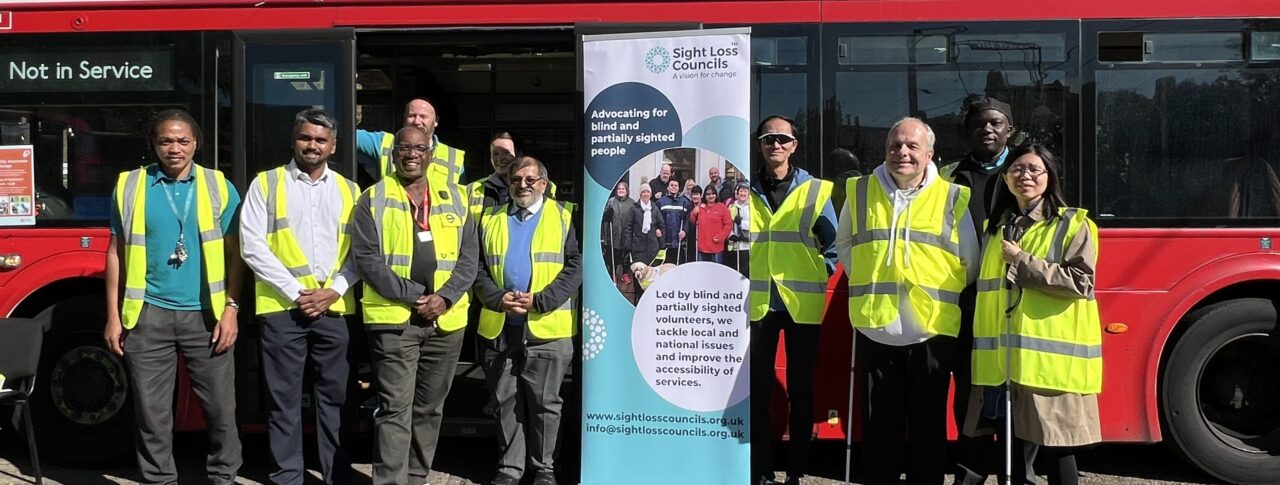
London Sight Loss Councils bring lived experience to bus garages across the capital
Volunteers from London Sight Loss Councils have helped more than 100 bus drivers across the capital better understand sight loss and the challenges blind and partially sighted passengers can face when travelling by bus.
Sight Loss Councils (SLC), in partnership with Thomas Pocklington Trust, and Guide Dogs, have developed the Bus Driver Vision Awareness Training programme. The programme helps drivers better understand the barriers blind and partially sighted (BPS) passengers can face and the practical steps they can take to provide effective support.
Working in partnership with Transport for London (TfL) and bus operators across the capital, London SLC volunteers shared their lived experiences directly with drivers, highlighting some of the barriers BPS passengers can face when travelling by bus. These can include identifying the correct bus, finding a priority seat, understanding diversions and route changes, and knowing when it is time to get off the bus.
The sessions encouraged open conversations between passengers and drivers, providing an opportunity for both groups to ask questions, share experiences, and gain a better understanding of the challenges each can encounter.
By drawing attention to the difficulties that some BPS people experience when travelling by bus, volunteers highlighted the simple actions drivers can take to make journeys more accessible, inclusive and welcoming.
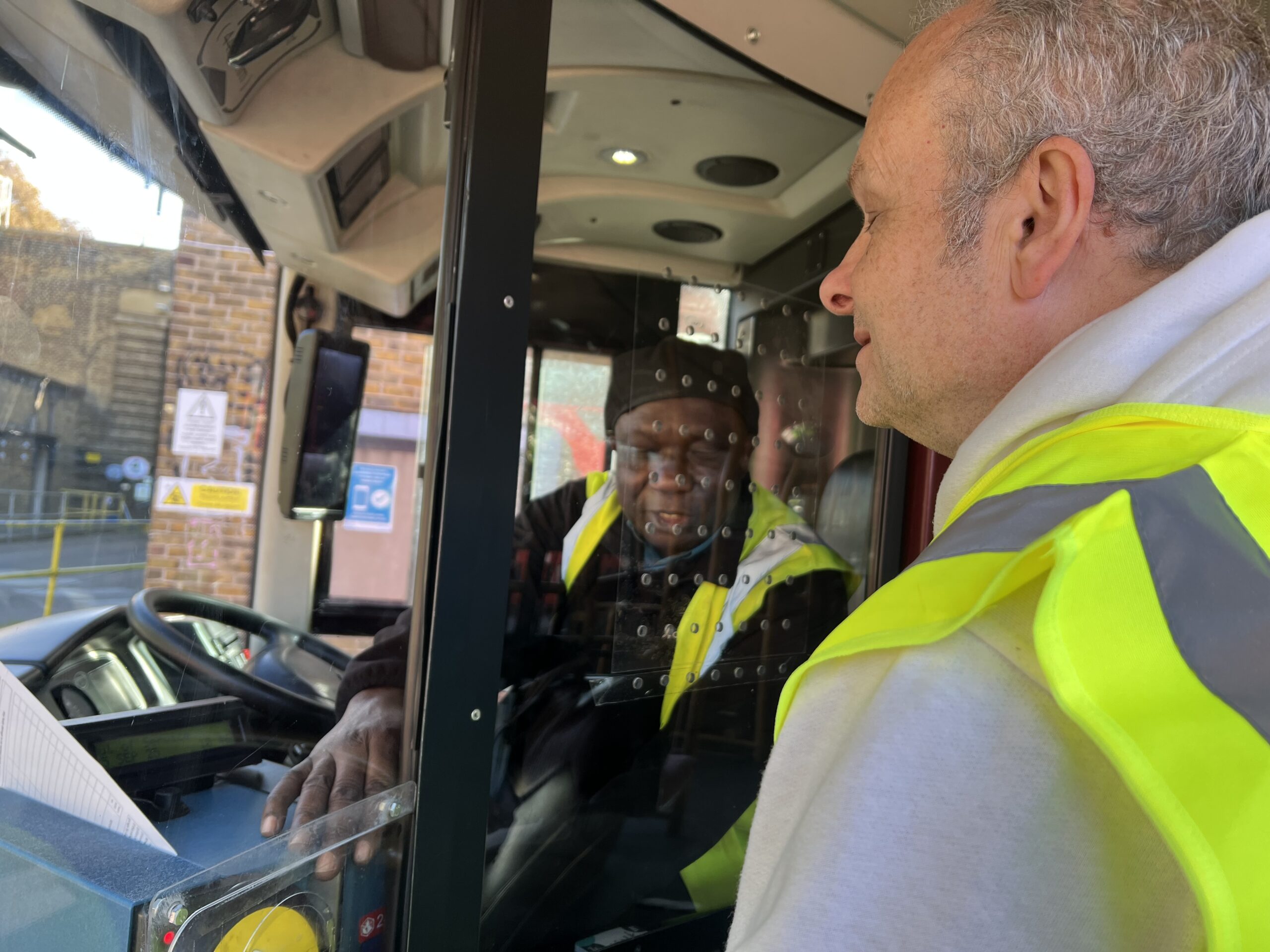
Liam O’Carroll, Interim Engagement Manager for London SLCs, during a practical exercise with bus driver
Sharing lived experience
Reflecting on the programme, Denise, a South East London SLC volunteer, said:
“Engaging with bus drivers made for interesting visits as the drivers who came to the events were very open to discussing the needs of blind and partially sighted passengers.
Haren, a South West London SLC volunteer, added:
“I joined the bus garage visit in Putney. I was pleasantly surprised by the number of drivers who joined us on the bus to hear about our journey experiences as blind and partially sighted passengers. They were very engaged and receptive to our feedback.
“It was a positive two-way conversation. I gained insights into the issues drivers encounter on their routes and why problems can arise. I even picked up a couple of tips that I have used to improve my own bus journeys since then.”
Liam O’Carroll, Interim Engagement Manager for London Sight Loss Councils, said:
“Bus travel is a vital lifeline for many blind and partially sighted people in London, but we continue to hear about the barriers passengers face. These garage visits have given us a fantastic opportunity to talk directly with drivers, share practical tips on supporting people with sight loss, and learn more about the challenges drivers experience themselves. That exchange of knowledge is helping to build a better and more accessible journey for everyone.”
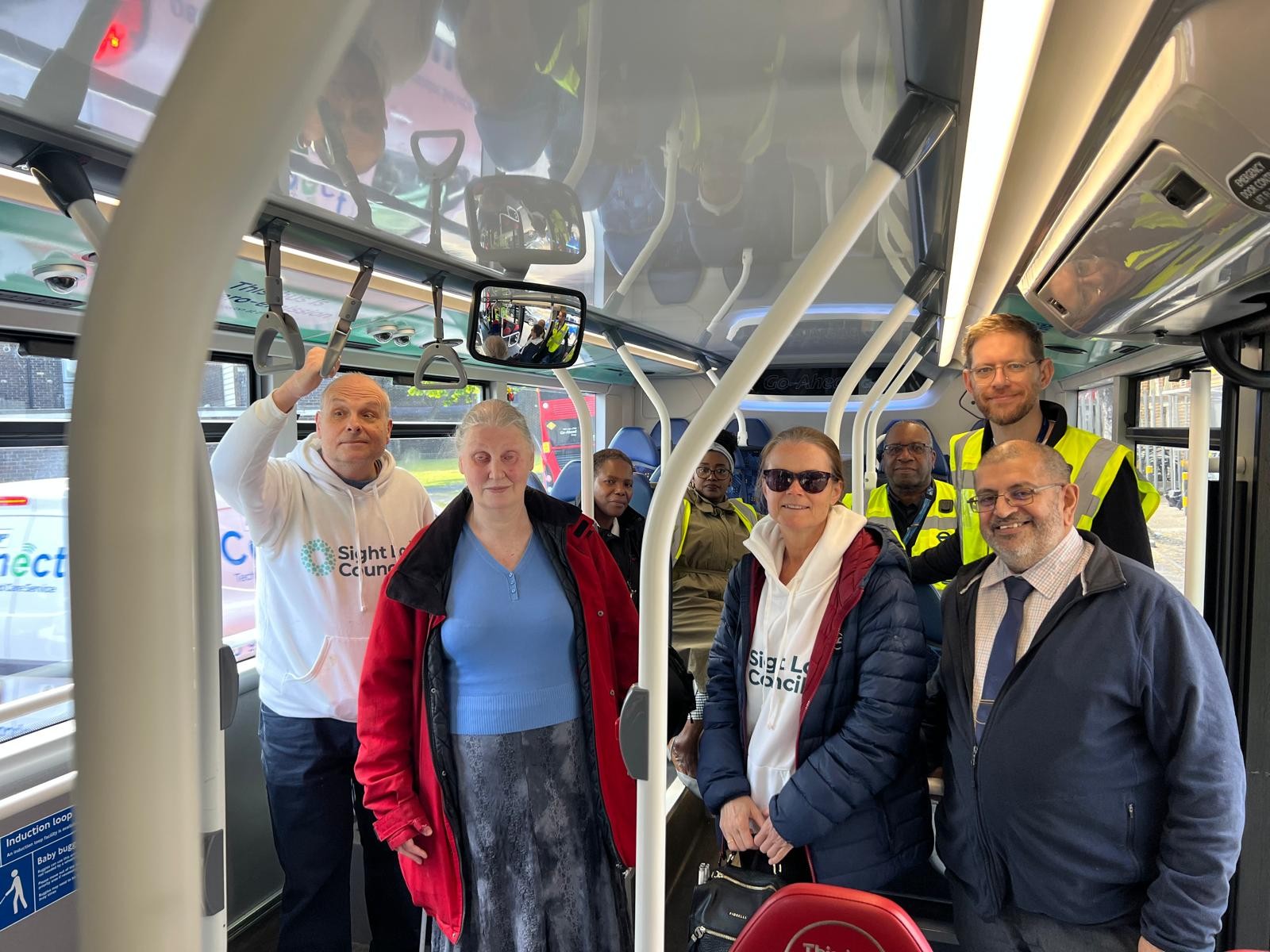
South West London SLC pictured onboard a stationary bus with TfL staff at Sutton Bus Garage
Stepping into passengers’ shoes
One of the major benefits of holding the sessions at bus garages was the opportunity to demonstrate accessibility challenges. Volunteers discussed common experiences, such as locating the yellow card reader, finding a priority seat, and safely boarding and leaving the bus.
Drivers were also invited to wear simulation glasses that replicate different eye conditions and levels of sight loss. While wearing the glasses, they attempted to board, move around, and disembark from a bus, helping them better understand some of the physical and emotional challenges faced by blind and partially sighted passengers.
Cedric, a driver at Transport UK’s Beddington garage, said:
“This session has increased drivers’ awareness of issues such as diversions, blocked bus exits, and buses queuing at stops. It also highlighted the importance of being aware of who may be boarding or alighting.”
Evren, a driver at Go-Ahead’s Northumberland Park garage, tried to find a seat while wearing simulation glasses that replicated tunnel vision. Reflecting on the experience, he said:
“This really touched me and it was very emotional. I felt some of the emotions I expect some people experience when they try to find a seat.”
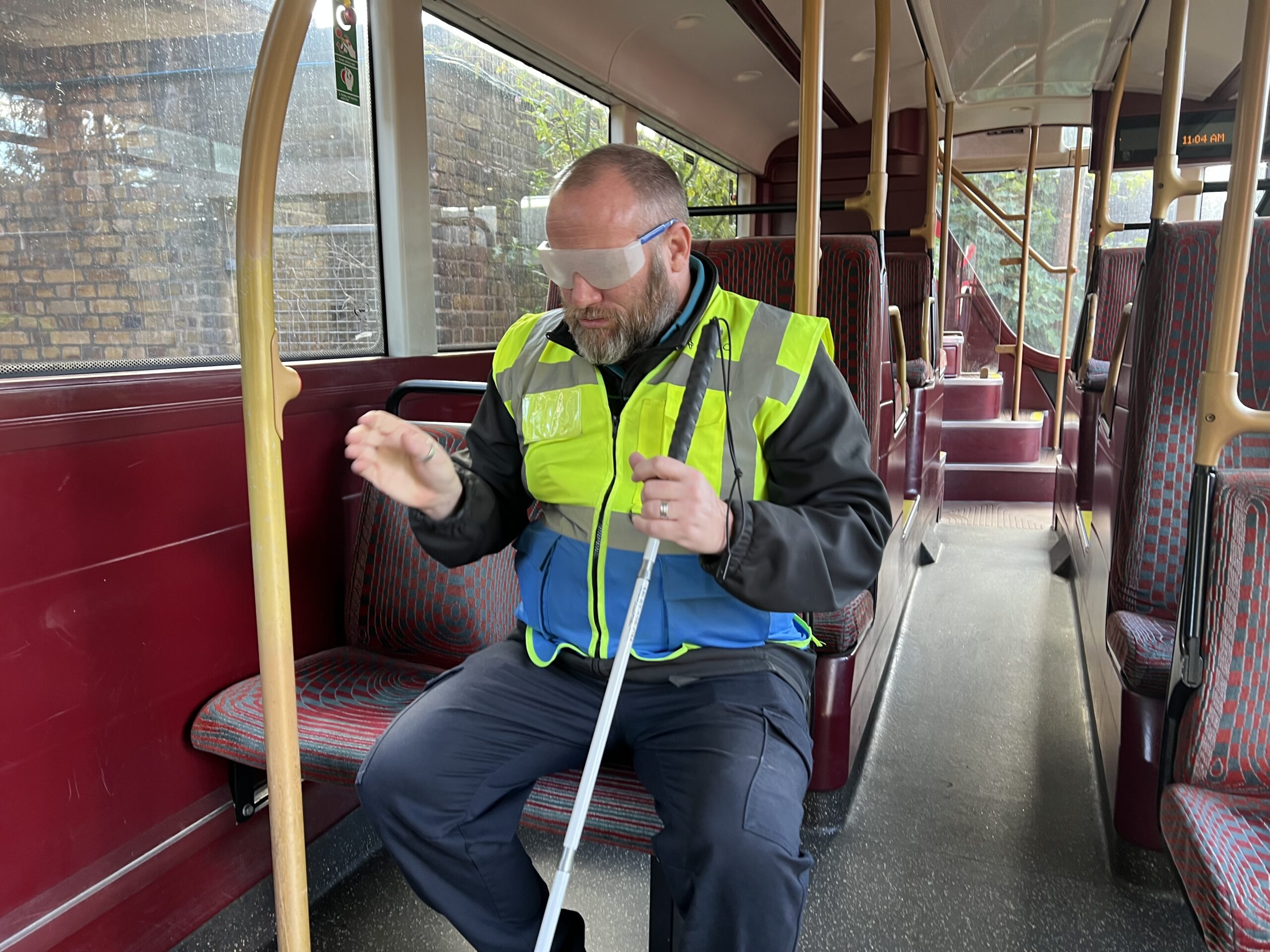
A bus driver practises locating the stop bell while wearing sight loss simulation glasses
Tara, a driver at Arriva’s Enfield garage, reflected on the importance of verbal communication:
“I found it really useful to put myself in the shoes of a blind or partially sighted person to understand what they need, rather than what I think they need. I’ll continue to be welcoming, vocal and patient with my passengers, because not all disabilities are visible.”
Drilon, a driver at Arriva’s Clapton garage, added:
“After coming along today, I will definitely make sure I always stop at the flag and call out the bus number at all times. I am shocked at how uncomfortable I felt during the experience.”
Drivers also took away concertina cards containing practical tips on how to support blind and partially sighted passengers.
The challenges many blind and partially sighted passengers face when travelling by bus have not disappeared. However, London Sight Loss Councils have been encouraged by the openness of drivers and their willingness to listen, learn and engage.
Through their ongoing partnership with Transport for London (TfL) and bus operators across the capital, London Sight Loss Councils will continue to ensure the voices of blind and partially sighted passengers help shape conversations about accessibility and contribute to a more inclusive bus network.
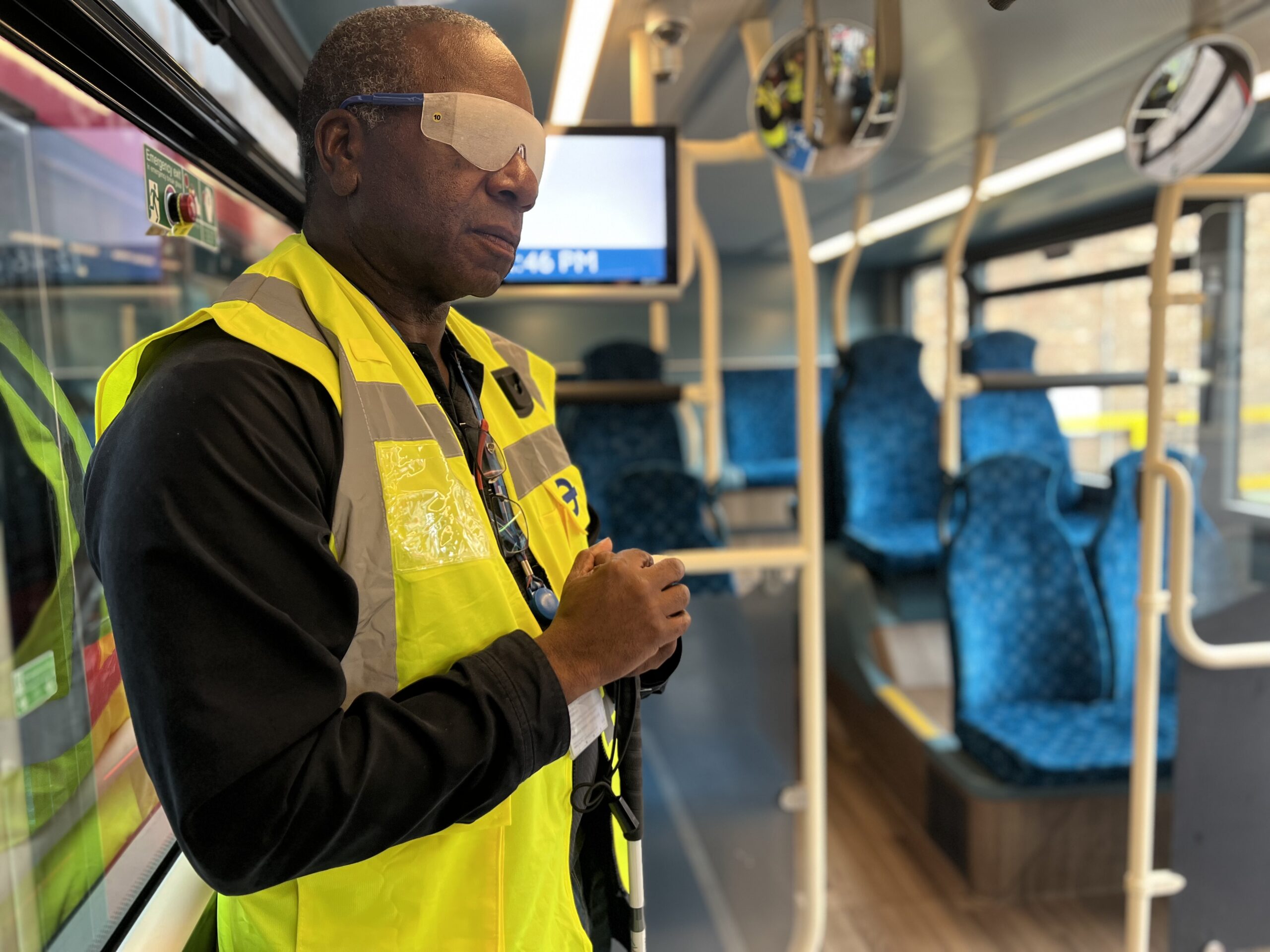
Brian Gordon, TfL Travel Mentor Manager, wears simulation glasses onboard a bus
Find out more
Learn more about our Bus Driver Vision Awareness Training
TfL’s Travel Mentoring Service
Join us
Passionate about making a difference? Want to influence positive change? Our Sight Loss Councils, led by blind and partially sighted volunteers, are recruiting new members. Join us today!
We use our lived experience to create positive change for others. Together, we tackle local issues and work with businesses and service providers to improve the accessibility of their services.
Join us to help ensure visually impaired people in your area can live the lives they want to lead.
Publication date: 29 September 2026