Essex Sight Loss Council Hosts Breast Screening Awareness Event for Blind and Partially Sighted Women
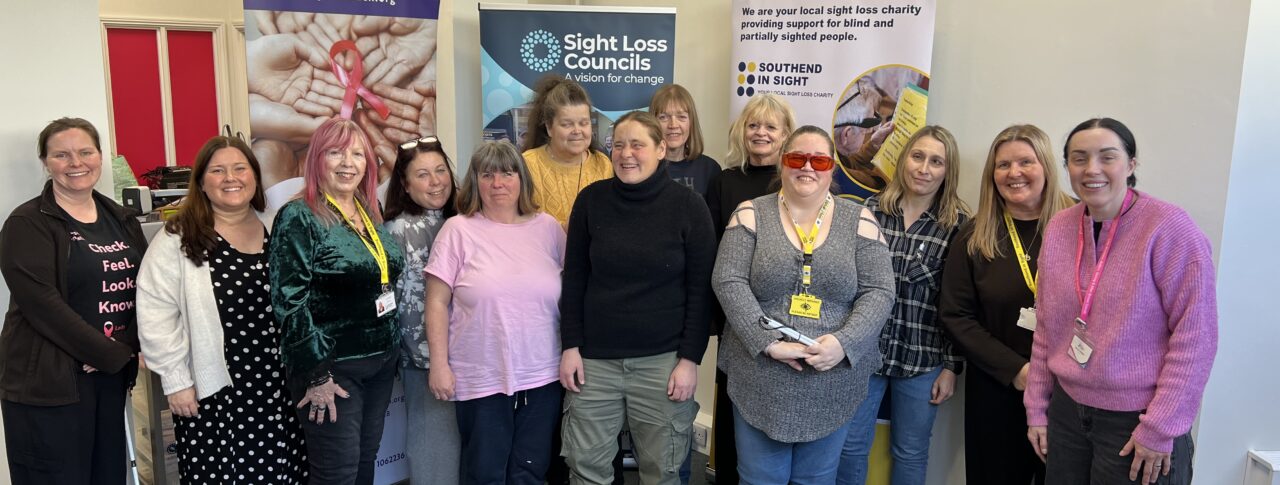
Essex Sight Loss Council (SLC) has hosted a dedicated Breast Screening Awareness event for blind and partially sighted (BPS) women in Southend on 5 March, thanks to a micro grant awarded by Healthwatch Essex in partnership with NHS Mid and South Essex.
The micro‑grant programme supports community groups across Mid and South Essex to run activities that encourage people to attend breast screening appointments.
The initiative was launched in response to lower-than-average breast screening uptake in parts of Essex. It is designed to reach communities who may experience additional barriers to accessing healthcare.
To support this work, Essex SLC partnered with local sight loss charity Southend In Sight, who hosted the session at their community centre and invited community members they support to take part.
The event brought together 10 to 15 BPS women aged 48 to 70 for an open discussion about the barriers they face when accessing breast screening. These included issues with communication formats, staff awareness, and the emotional and practical challenges of attending appointments.
Participants also heard from Angela Fiore, a nurse at Lady McAdden, a local breast cancer charity dedicated to supporting people before, during, and after breast cancer. She explained the importance of screening, what happens during an appointment, and how to carry out self-checks.
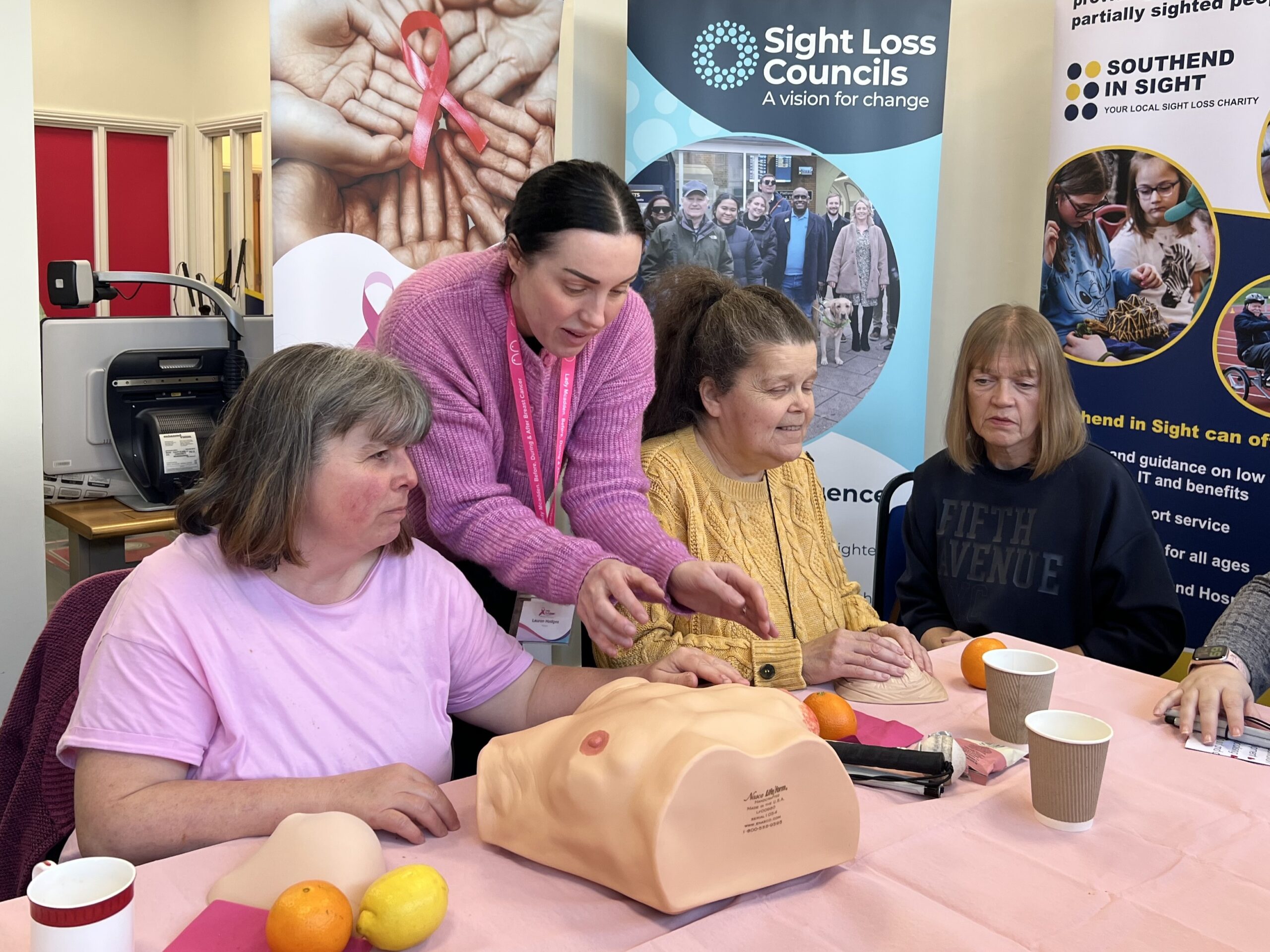
Lauren, Lady McAdden, demonstrating how to check your breasts
Reflections from partners, volunteers and health leaders
Sam Fox, Essex Sight Loss Council Member, said about the event:
“It was really helpful to have a proper explanation without relying on images – something blind people can’t access – and to openly discuss the barriers we all face, especially during hospital appointments. The Accessible Information Standard says our health information, like appointment letters, must be given in a format we can use independently.”
“For blind and partially sighted people, overcoming the emotional and physical obstacles to get there is already challenging. Hopefully, our discussions at this event and the information we’ve been given will help more of us feel confident enough to go to our breast screening appointments.”
Lucy Martin, CEO, Southend In Sight, said:
“Southend In Sight are more than happy to host this event to help improve accessibility for breast screening appointments for blind and partially sighted people, and fully support the mission to increase access to healthcare.”
Amy Askew, Engagement Manager, Essex Sight Loss Council, said:
“It is a privilege to work with our partners from Healthwatch Essex, Southend In Sight and Lady McAdden to host this breast screening awareness event for blind and partially sighted women. We have had open and honest conversations around the barriers we face as a group, which has been truly inspiring. We hope that by sharing our lived experience we can help improve the screening process and encourage more blind and partially sighted women to attend their all‑important appointments.”
Eamonn Dunne, Policy and Campaigns Manager at Thomas Pocklington Trust (TPT), added:
“Breast cancer is the most common cancer in the UK, and regular screening is one of the best ways to detect it early. Through our ‘Make health accessible’ campaign, TPT is working with NHS screening providers to remove barriers that may prevent blind and partially sighted women from attending. This includes inaccessible information, screening locations and gaps in staff awareness. Hearing directly from women with lived experience is essential to making breast screening truly accessible.”
Renee Robey, Engagement Officer for Healthwatch Essex, said:
“Healthwatch Essex is proud to be distributing the Mid and South Essex Breast Screening Champions Fund in partnership with NHS Mid and South Essex. This is a community grants programme to support peer-led engagement and increase uptake of breast screening among people facing barriers in mid and south Essex. The programme recognises that trusted community voices are integral to effectively connecting with people in a way which prompts engagement and action.
“By supporting community-led advocacy, the fund aims to create authentic, culturally appropriate messaging to improve screening participation. We are pleased to support Essex Sight Loss Council whose fantastic networks and expertise will help engage people living with sensory impairments. This funding will support Essex Sight Loss Council to raise awareness, improve accessibility and ensure that more people feel comfortable accessing breast screening.”
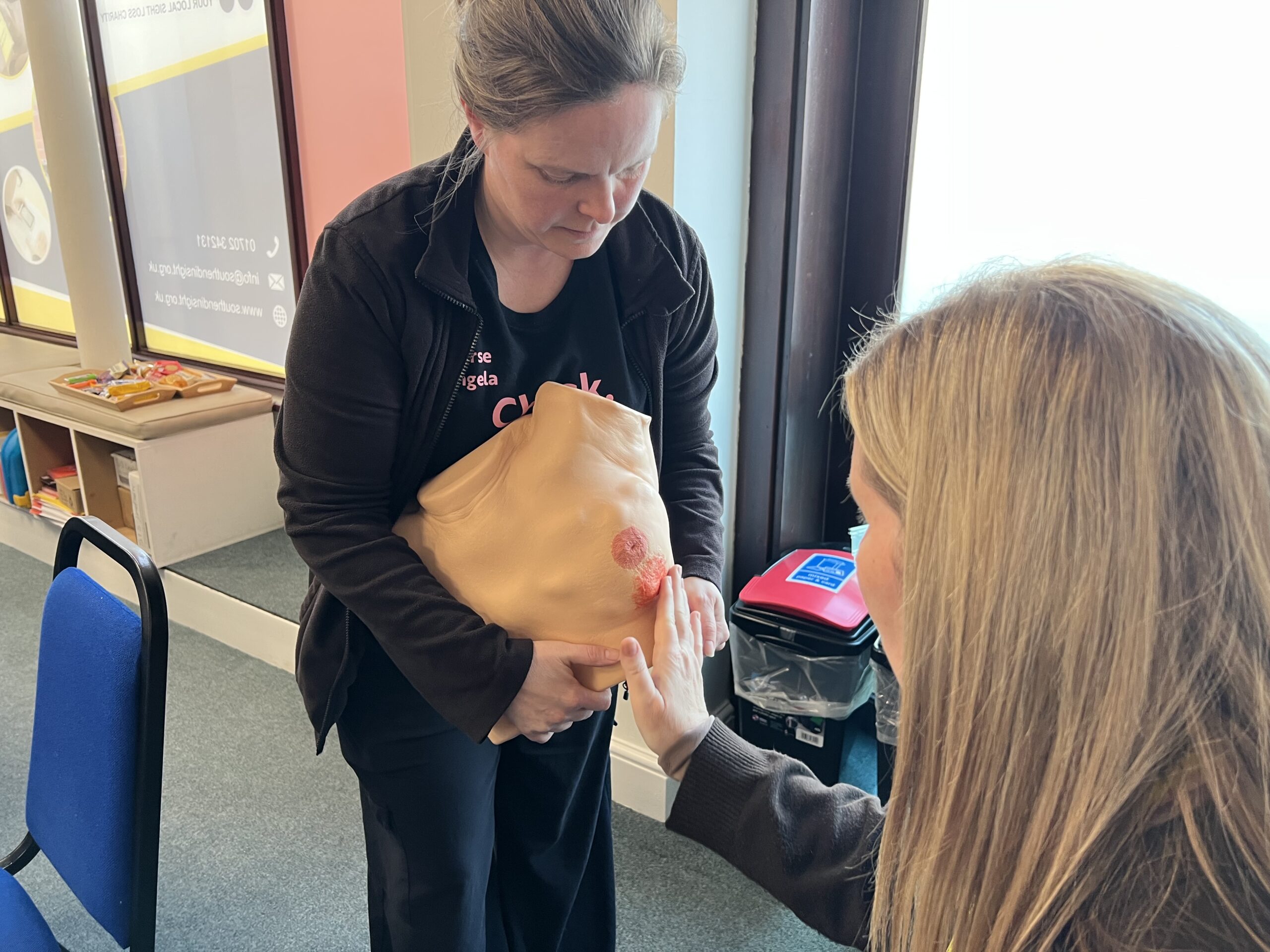
Lucy, Southend in Sight, feeling a breast model used to demonstrate changes to be aware of
Join Essex Sight Loss Council
Passionate about making a difference? Want to influence positive change? Our Sight Loss Councils, led by blind and partially sighted volunteers, are recruiting new members. Join us today!
We use our lived experience to create positive change for others. Together, we tackle local issues and work with businesses and service providers to improve the accessibility of their services.
Join us to help ensure visually impaired people in your area can live the lives they want to lead.
Stay in the know
Do you want to get involved in our national campaigns? Stay up to date with news from Sight Loss Councils and Thomas Pocklington Trust – sign up to our mailing list.
Publication date: 06 March 2026